

Your ERP system is the backbone of your business, managing everything from finances to inventory, HR to customer relationships. But even the best ERPs might sometimes need a specialized part to optimize performance in specific areas. That’s where ERP bolt-ons come in.
An ERP bolt-on is a specialized upgrade you add to your existing ERP. It’s a separate software application that integrates seamlessly with your core ERP system, enhancing its capabilities in a particular area without requiring a complete overhaul of the system.
Why Consider a Bolt-On?
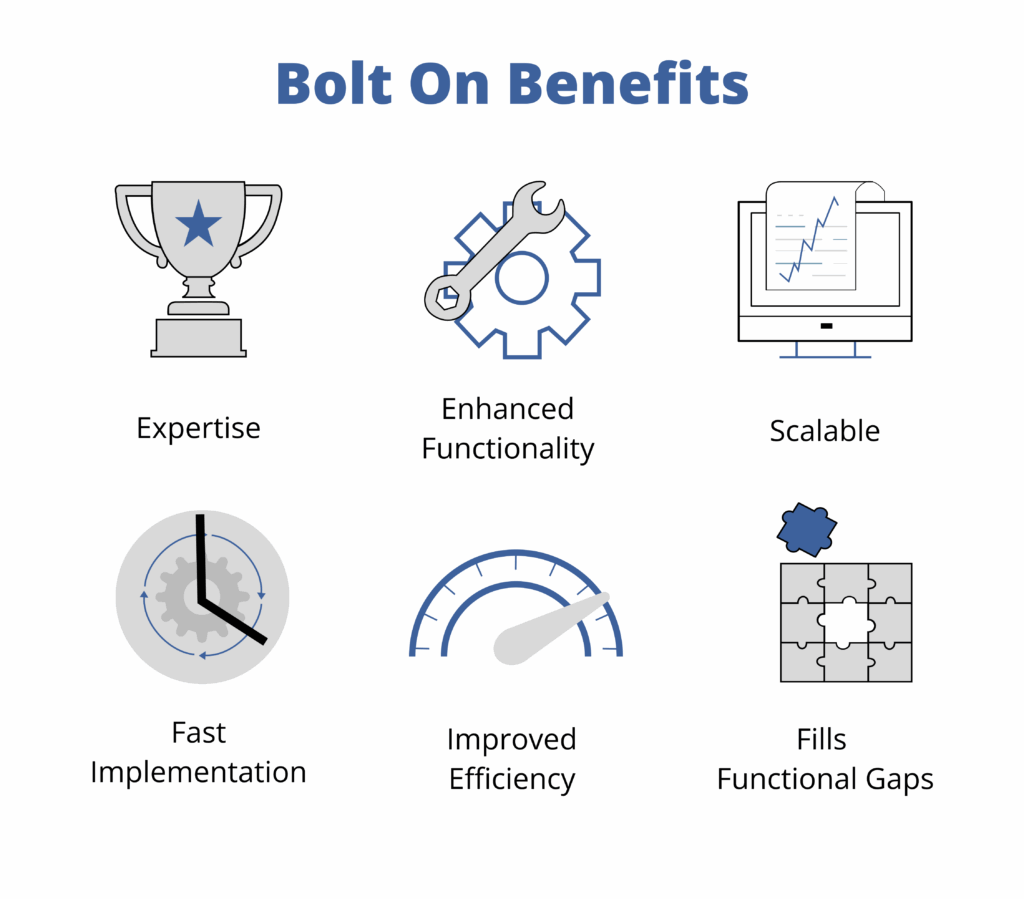
While modern ERPs are incredibly comprehensive, they can’t have every piece of functionality. Here’s why bolt-ons are a valuable addition to your tech stack:
- Specialized Functionality: ERPs are designed for breadth, not the deepest, most niche functionalities. A bolt-on, by contrast, is purpose-built to excel in a specific area. For example, while your ERP has an AP module, a dedicated AP automation bolt-on might offer advanced AI-driven invoice capture, dynamic discounting optimization, and sophisticated fraud detection that the native module simply doesn’t.
- Best-of-Breed Solutions: Sometimes, the best solution for a particular business function isn’t a module within your ERP, but a leading, standalone application. Bolt-ons allow you to integrate these “best-of-breed” tools into your existing ERP ecosystem.
- Filling Gaps and Addressing Unique Needs: Every business is unique. Your ERP might cover 90% of your needs, but those remaining 10% could be critical. A bolt-on can precisely address those specific gaps or unique industry requirements.
- Faster Implementation and ROI: Implementing a bolt-on is typically much faster and less disruptive than customizing your core ERP or undertaking a full ERP upgrade. This often leads to a quicker return on investment.
- Avoiding Costly Customizations: While ERPs can be customized, extensive custom coding can be expensive to develop, difficult to maintain, and challenging to upgrade. Bolt-ons offer a standardized, supported alternative to complex customizations.
- Future-Proofing: As technology evolves, new solutions emerge that offer significant advantages. Bolt-ons allow you to adopt these innovations without having to rip and replace your entire ERP.
Common Examples of ERP Bolt-Ons
You’ll find bolt-ons for almost every business function. Here are some of the most common and impactful:
- Accounts Payable Automation: As discussed in our previous post, these solutions automate invoice capture, matching, approval workflows, and payments, often leveraging AI and machine learning for superior efficiency and fraud detection.
- Treasury Management Systems: For more complex cash management, forecasting, and debt management than a standard ERP offers.
- Advanced Planning and Scheduling: For manufacturers, these systems optimize production schedules, material planning, and capacity utilization beyond the basic capabilities of an ERP’s manufacturing module.
- Customer Relationship Management: While many ERPs have integrated CRM, some businesses opt for specialized CRM bolt-ons for more advanced sales, marketing, and customer service functionalities.
- Warehouse Management Systems: For companies with complex warehousing operations, a dedicated WMS provides granular control over inventory, picking, packing, shipping, and labor management.
- Business Intelligence & Analytics Tools: While ERPs offer reporting, advanced BI tools (like Tableau or Power BI) can provide deeper data analysis, visualization, and predictive capabilities.
- eCommerce Platforms: Integrating a dedicated eCommerce platform (like Shopify Plus or Magento) with your ERP for seamless order processing, inventory synchronization, and customer data management.
And so many more! If there is a problem to be solved, it’s likely that there is a solution out there for it!
The Importance of Seamless Integration
The real power of a bolt-on lies in its ability to integrate seamlessly with your core ERP. This means data flows smoothly between the two systems, eliminating manual data entry, reducing errors, and providing a unified view of your operations. When evaluating bolt-ons, always prioritize those with proven integration capabilities with your specific ERP system.
Are Bolt-Ons Right for Your Business?
If you’re finding specific areas of your business are bottlenecks, or if you’re missing out on key efficiencies or insights that your current ERP isn’t providing, then exploring bolt-on solutions could be your next strategic move. They offer a flexible, efficient, and often more cost-effective way to supercharge your ERP and drive greater success for your business.