

Line Item Extraction

What Is Line Item Extraction?

Line item extraction is a crucial portion of the process of invoice parsing and tracking spend within organizations. In this post, we’ll discuss the importance of line item extraction, how it works, how OCR and other technologies play a role in this process, and more.

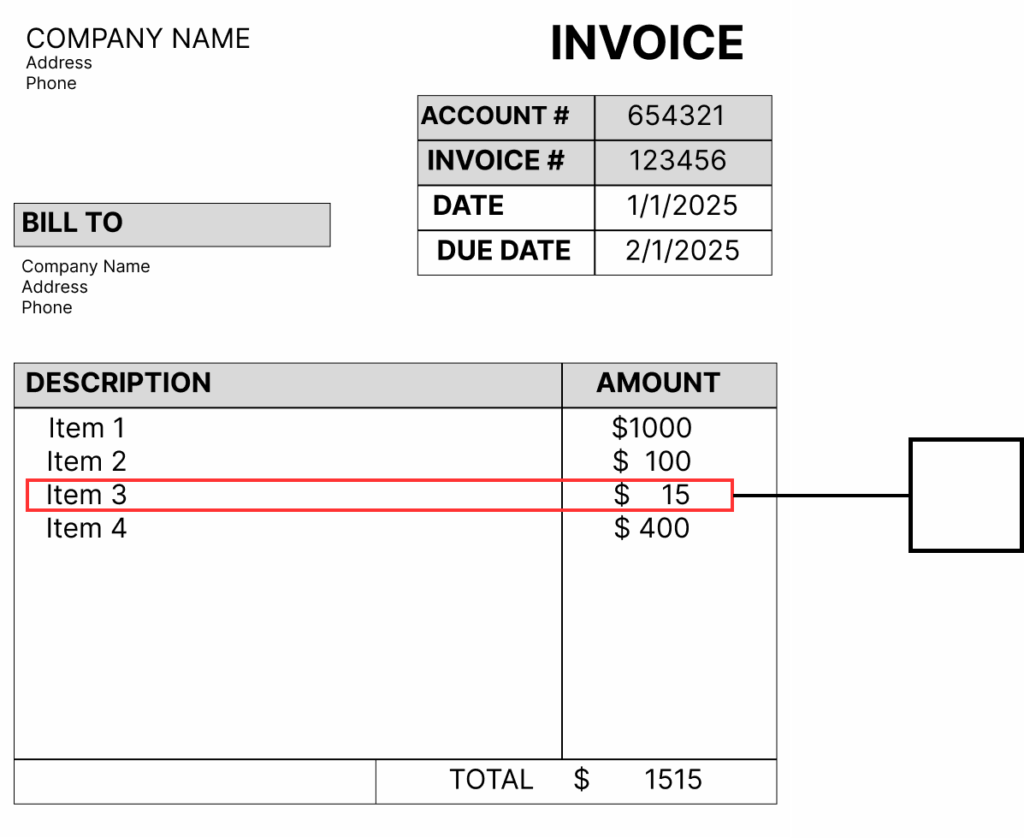
Line item extraction is the process of extracting the details of your purchase from an invoice, bill, or receipt. It is an extremely efficient way to keep track of expense categories and track your organization’s resource expenditure. The process on its own is fairly straightforward with the right technology; however, it wasn’t always as easy as it is today.

Traditionally, line item extraction was done manually by data entry professionals. Depending on the invoice, this can be an extremely time-consuming and error-prone process. In the process of trying to save money on various back-office expenses, extracting data from different line items of an invoice isn’t exactly optional for most organizations, although it is one of the more tedious tasks.
Line Item Extraction

Why Is Line Item Extraction Important?

Line item extraction is useful for most organizations for tracking expenses. It allows for the categorization of different items in order to track spending for different areas. Invoices can be extremely complex and have the potential for errors created either internally or externally.

Once this data is taken from the invoice, it is sent to an ERP or other central financial technology. This helps organizations to keep track of spending, find errors within invoices if numbers don’t add up, and add structure to invoice data for better visibility in both the short and the long term.

How Does OCR Play A Role In Line Item Extraction?

OCR assists in line item extraction by being the extractor. As OCR becomes more advanced, it is increasingly able to extract details and understand them in an almost human-like way. OCR is a great alternative to manual extraction of line item data as it can essentially accomplish the same task but faster, and in a much more reliable way, generally.

For organizations that pair OCR with AI and ML, the extraction process can go a step further, sending not only the correct information to the ERP but also contextualized information. AI and ML can greatly increase the accuracy of the data extracted from the document. Additionally, when AI/ML assists OCR, data can be extracted from all different kinds of documents, even if line items are harder to find.

Learn More

Extracting data from line items of financial documents is an essential practice made easier through technologies such as OCR. With this technology growing stronger and stronger, line item extraction is easier than ever. Adding this practice to your organization, if not already used, is essential to greater spending visibility. To learn more, contact ICG about OCR/AI/ML technology.

Posts you might like:

Why Your Vendor Portal Needs Invoice Search Functionality

If you’ve ever worked in Accounts Payable or Procurement, you're familiar with vendors asking for updates on a specific invoice that was sent three weeks ago. While invoice submission gets the data into your system, invoice search is what keeps it from becoming a...

Why Your Vendor Portal Needs Invoice Submit Functionality

If your Vendor Portal is currently just a digital library where suppliers download PDFs and view static purchase orders, you need an upgrade. The most critical bridge between you and your vendors is the invoice. If that bridge is still built on manual email...

Why Your Vendor Portal Needs Dispute Functionality

Dispute functionality within your vendor portal is a great starting point for healthy, transparent, and efficient vendor relationships. Without a centralized way to flag issues, disputes can get buried in endless email chains or lost in missed phone calls and...

Key Accounts Payable Metrics

If you aren't measuring your AP performance, you could be leaving money on the table—either through missed discounts, late fees, or sheer operational inefficiency. Here are the essential accounts payable metrics every financial back office should track to move from...

What to Look for in a Modern Back-Office Solution

As organizations scale, spreadsheets and legacy systems that were once considered "good enough" can become liabilities to an organization. When this happens, it's probably time to start looking for a modern back-office solution that actually fuels growth. But what are...

Can Your ERP Really Do It All?

ERP systems are often sold as the single source of truth for your organization. But as many IT directors or CFOs will tell you after a year of implementation, "all-in-one" often comes with an asterisk. Either it isn't really all in one, there are extra fees, and more....

Top 6 Ways to Earn Vendor Loyalty

For companies with vendors, it's all about how you treat them. Vendor loyalty is about building a frictionless, transparent partnership that makes you the "customer of choice." When vendors are loyal to you, they prioritize your orders during supply chain crunches,...

Driving Manufacturing Success

Behind every high-performing organization is the financial back office, keeping the lights on and the gears running. For manufacturers juggling complex vendor relationships and high transaction volumes, ICG Innovations provides the functionality to turn any back...

PCards, Visibility, and Fraud Prevention

Why PCards are the Back Office’s Best Defense For decades, the "old way" of managing company spend was built on a foundation of trust and a mountain of paper. You’d mail a check, wait for a bank statement, and spend the first week of the following month playing...

1 Year of ICG Innovations

On Friday, February 13, 2026, ICG Innovations reached its first big milestone – one year with our new name! For the past year, we have been proud to call ourselves ICG Innovations, and we are excited to see where our new name takes us. Here's to 1 year of ICG...