

What is the financial back office?
The financial back office includes all of the operations that involve the economic functions of a business. It handles a wide range of tasks, including accounting, finance, and treasury. Typically, it involves activities such as processing transactions, reconciling accounts, preparing financial reports, managing cash flow, and ensuring compliance with financial regulations. It’s all of the behind-the-scenes work that keeps the financial health of a company running smoothly.
The existence of a “back” office implies that there is a front/middle office. The distinguishing names originated from the location of the people who work the jobs.
The front office is typically the face of a company, responsible for interacting directly with customers or clients. It encompasses various departments and functions that deal with customer service, sales, marketing, and public relations.
The middle office is the bridge between the front office and the back office. It serves as a support function, providing analysis, risk management, and operational oversight to ensure the smooth functioning of the business.
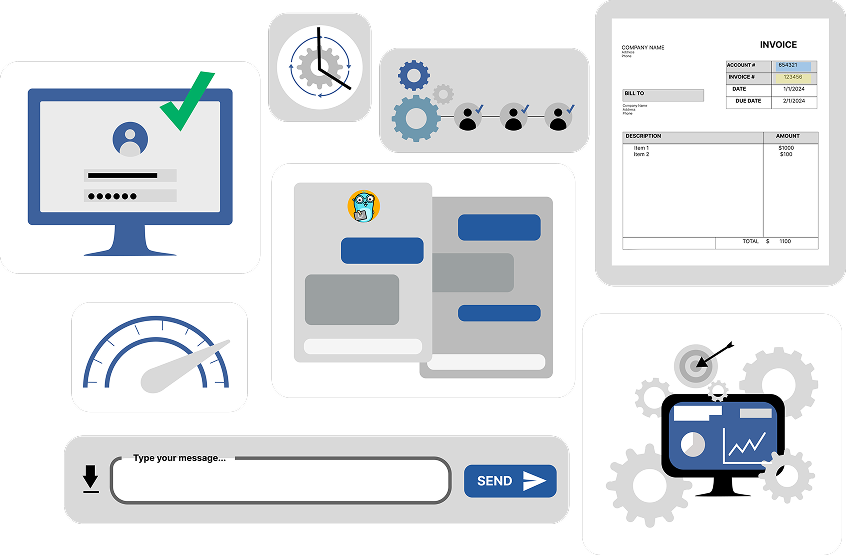
What are the different parts?
General Accounting
- Handles day-to-day accounting tasks such as recording transactions, posting journal entries, and preparing financial statements.
- Ensures accurate and timely financial reporting.
Accounts Receivable
- Manages the collection of money owed to the business by customers.
- Issues invoices, tracks payments, and follows up on overdue accounts.
Accounts Payable
- Processes payments to vendors and suppliers.
- Manages vendor relationships, reviews invoices, and ensures timely payments.
Treasury
- Oversees the management of the company’s cash flow.
- Handles investments, borrowing, and risk management.
Payroll
- Processes employee payroll, including calculating wages, taxes, and deductions.
- Ensures compliance with employment laws and regulations.
Financial Reporting
- Prepares financial statements such as the income statement, balance sheet, and cash flow statement.
- Analyzes financial data to provide insights for decision-making.
Compliance
- Ensures compliance with federal, state, and local tax laws.
- Prepares tax returns and handles tax audits.
- Ensures compliance with industry-specific regulations and accounting standards.
Financial Analysis
- Analyzes financial data to identify trends, assess financial performance, and make recommendations for improvement.
Internal Controls
- Develops and implements internal controls to safeguard assets, prevent fraud, and ensure accurate financial reporting.
These are just some of the key areas that make up the financial back office. The specific functions and responsibilities may vary depending on the size and complexity of the business.
How has the back office changed?
The back office has undergone a significant transformation in recent years, moving from traditional, paper-based processes to more digitized and automated approaches. Here’s a comparison between the traditional and modern back office:
Traditional Back Office
- Paper-based processes: Relied heavily on manual data entry, paper documents, and physical filing systems.
- Siloed departments: Often operate in silos, with limited communication and collaboration between different functions.
- Labor-intensive: Required a large workforce to handle manual tasks and data entry.
- Slow and inefficient: Processes were time-consuming and prone to errors.
- Limited data accessibility: Access to financial data was restricted and difficult to analyze.
While organizations may still have features of a traditional back office, the modern back office systems are becoming more and more common.
Modern Back Office
- Digital transformation: Leverages technology to automate processes, improve efficiency, and reduce costs.
- Integrated systems: Employs integrated software solutions that streamline workflows and improve data sharing.
- Automation: Utilizes automation tools to automate repetitive tasks, reducing manual labor and errors.
- Cloud-based solutions: Leverages cloud computing to provide scalability, flexibility, and cost-effectiveness.
- Data-driven decision-making: Utilizes advanced analytics and data visualization tools to support informed decision-making.
Why is the financial back office important?
Accurate Financial Reporting
It ensures that financial information is accurate, reliable, and presented promptly. This is essential for making informed business decisions, attracting investors, and complying with regulatory requirements.
Risk Management
The back office plays a vital role in identifying and mitigating financial risks, such as fraud, errors, and losses. By implementing strong internal controls and monitoring financial data, the back office helps protect the company’s assets and financial stability.
Compliance
The back office is responsible for ensuring compliance with various financial regulations, including tax laws, accounting standards, and industry-specific requirements. Non-compliance can lead to significant financial penalties and damage to the company’s reputation.
Operational Efficiency
By streamlining processes and automating tasks, the back office can improve operational efficiency and reduce costs. This can free up resources for other strategic initiatives and enhance the overall profitability of the business.
Decision Support
The back office provides valuable financial data and analysis that can inform strategic decision-making. By understanding the company’s financial performance and trends, management can make informed choices about investments, resource allocation, and risk management.
Learn More
The financial back office plays a vital role in the success of any business. By streamlining processes, ensuring accuracy, and supporting decision-making, the back office contributes to the overall financial health of an organization.
The shift from traditional to modern back offices has been driven by technological advancements and the desire for improved efficiency and cost-effectiveness. By embracing digital transformation and automation, businesses can realize significant benefits, including reduced costs, enhanced accuracy, and improved decision-making.