Choosing the right back office technology is a critical decision for any organization. It can be the difference between streamlined, efficient operations and a mess of manual workarounds, half-working systems, and imperfect solutions. Financial back office technology refers to the systems and software that handle the financial internal and administrative functions of a business, such as accounting and payroll. When it comes to selecting a solution, many businesses face a key choice: Is a ready-made, out-of-the-box software better for our organization, or is a more customized solution what we need?
Why Choose Out-of-the-Box Software
Out-of-the-box software, also known as off-the-shelf software, is a ready-to-use solution designed to meet the general needs of a wide audience. It’s a quick and affordable way to get a new system up and running.
Pros of Out-of-the-Box Software
- Cost-Effectiveness: Because the development costs are spread across many users, the initial and ongoing fees are typically much lower than a custom build.
- Rapid Deployment: You can often implement out-of-the-box software in a matter of days or weeks, allowing you to quickly realize a return on your investment.
- Reliability: These solutions are generally well-tested and have a large user base, which means common bugs and issues are usually identified and resolved quickly.
- Familiarity: Many employees may already be familiar with popular out-of-the-box products, reducing the time and cost associated with training.
Cons of Out-of-the-Box Software
- Limited Customization: Out-of-the-box software is designed for the masses, which means it may not perfectly align with your unique workflows and business processes. This can lead to inefficiencies or the need for manual workarounds.
- Functionality Bloat: The software might come packed with features you don’t need, making the system feel cluttered and confusing.
- Integration Challenges: While many out-of-the-box products offer integrations, they may not seamlessly connect with your existing systems, such as a legacy ERP, without significant work.
Exploring Alternatives
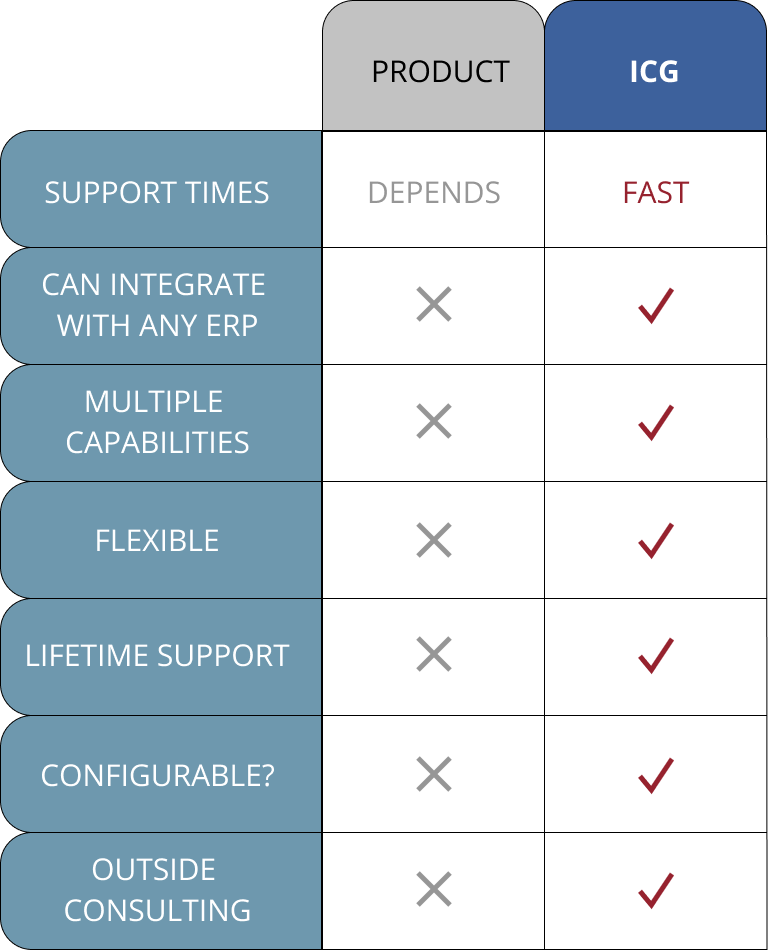
What if you could have the speed and reliability of an out-of-the-box product with the flexibility and tailored fit of a custom build? This is the crossroads where organizations like ICG Innovations excel. They represent a hybrid approach that bridges the gap between off-the-shelf and bespoke solutions.
ICG Innovations offers a suite of back-office solutions that are highly configurable rather than rigidly packaged. Their model focuses on providing targeted functionality that “bolts on” to your existing systems, rather than replacing them entirely.
Key Advantages of a Hybrid Model
- Enhanced Customization and Flexibility: Unlike out-of-the-box software, ICG’s solutions are flexible and highly adaptable to your specific business needs and workflows. This means you don’t have to compromise your processes to fit the technology.
- Expert Consulting: ICG and similar providers bring extensive consulting experience. They work with you to understand your pain points and configure a solution that truly solves your problems, ensuring a more strategic and successful implementation.
- ERP Agnostic: A major strength of this approach is its ability to integrate with any ERP system. This is crucial for businesses with complex IT ecosystems, as it allows them to leverage their existing infrastructure without a costly and disruptive overhaul.
- Targeted Functionality: With a modular, pay-as-you-go model, you only pay for the specific functions you need. This avoids the “bloat” often found in off-the-shelf products and ensures a more cost-effective solution tailored to your immediate requirements.
While offering significant benefits, this hybrid model can have a higher cost depending on the out-of-the-box software and the level of customization required. However, the value of a solution that perfectly fits and scales with your business often outweighs the initial price difference. The long-term savings in increased efficiency, reduced errors, and streamlined operations can be substantial.
Learn More
Ultimately, the choice of back office technology depends on your organization’s specific needs, budget, and appetite for change. If your business has generic needs and a tight budget, out-of-the-box software might be the perfect fit.
But for organizations with unique processes, complex integrations, and a desire for a truly tailored solution, exploring a hybrid approach with a partner like ICG Innovations can provide a powerful competitive advantage. To learn more about ICG’s solutions, view our short solution video here, or request a free demo.